Best Time of Year for Pressure Washing in Kansas City
“Best windows: April–early June, and September–October
Temperature needed: 50°F–85°F
But method matters more than month. See why below.”
If you've searched "best time to pressure wash my house in Kansas City," the answer depends on when you're asking. Search this in March, and you're probably picturing spring cleaning: powering through winter grime once the weather turns nice. Search it in August, like now, and the real question is different: is it too late for one window, and are you far enough out from the next one to plan ahead? Either way, there's a bigger question that matters more than timing: should your home be pressure washed at all, or soft washed?
We'll answer both, because getting the timing right on the wrong method still leaves you with a damaged surface.
The Real Answer: Two Windows, Not One Season
Kansas City's climate gives Johnson County homeowners two legitimate cleaning windows each year, not one:
Spring: mid-April through early June Once the last spring freeze passes, an average of April 16 in Olathe, April 8 in Kansas City proper, and April 18 in Paola, surface and water temperatures climb into the range where cleaning solutions actually work. This window addresses winter soot buildup and the first wave of spring pollen, which becomes food for algae and mildew later in the summer if it's left to sit.
Fall: September through late October This is the window most homeowners skip, and it's the one that matters most. Algae and mildew spend the humid Kansas City summer establishing themselves, reaching full maturity by early autumn. Cleaning before the season's first hard freeze, averaging October 23 in Olathe, October 28 in Kansas City, October 17 in Paola, clears that growth before winter moisture and UV exposure lock it in. Skip this window, and what was a surface-level bloom in October can become a set-in stain by spring. For the full seasonal breakdown, see our fall exterior checklist.
If You're Reading This in Late Summer
You've missed the spring window, and that's fine. The fall window is the more important one anyway. Late July through early September is exactly when Johnson County's algae and mildew growth is at its peak after a full summer of heat and humidity. Booking now means your cleaning happens right as fall approaches, clearing that growth before it sets in over winter instead of waiting until the leaves change and the first freeze is already close behind. If you wait until October to think about it, you're cutting your fall window close.
Why the Temperature Window Is 50°F to 85°F, Not "Whenever It's Warm"
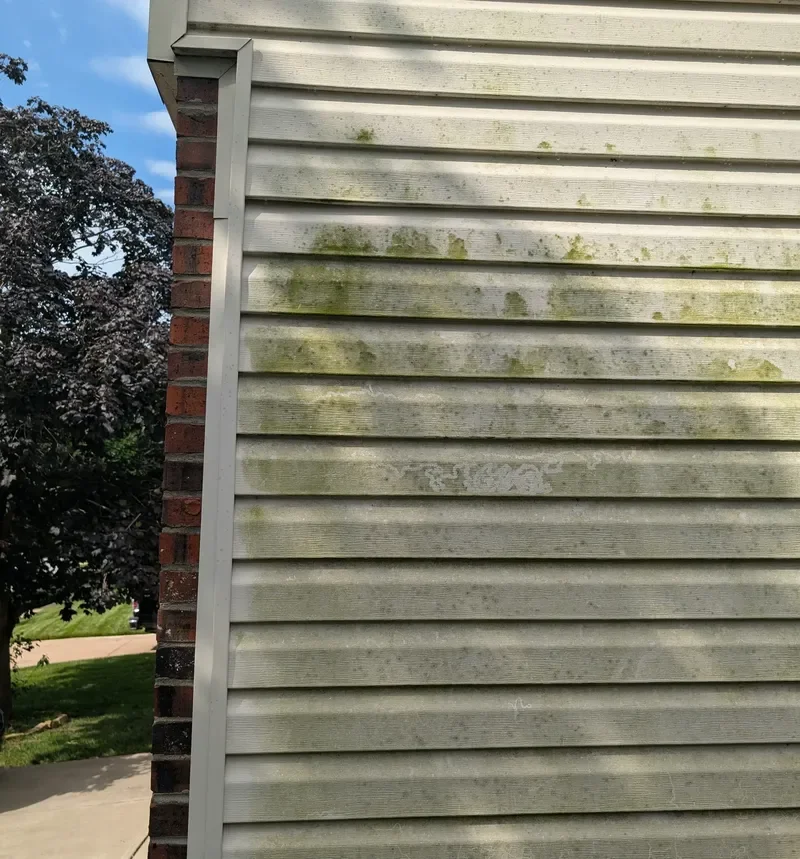
This isn't a preference. It's chemistry. The cleaning solutions used in professional exterior cleaning, including sodium hypochlorite-based treatments, lose most of their effectiveness below 50°F and are severely diminished at 40°F. This is also exactly the mechanism behind algae and mildew growth conditions on your home's exterior in the first place: humidity and moderate temperatures let them thrive, and the same range determines when cleaning actually works. Go below freezing and you introduce a different problem entirely: water that gets into siding laps, mortar joints, or masonry pores expands by roughly 9% as it freezes, which can crack caulking and distort siding profiles. That's not a hypothetical. It's basic physics working against your home's exterior.
So "the first nice day in March" isn't actually the best day to book anything. The professional window is 50°F to 85°F, which in Johnson County generally means you have from mid-spring through early summer, and again from early September through late October, before conditions work against you rather than for you.
Why Method Matters More Than Month
Here's the part most "pressure washing" searches miss: the surface being cleaned should determine the method, not the calendar.
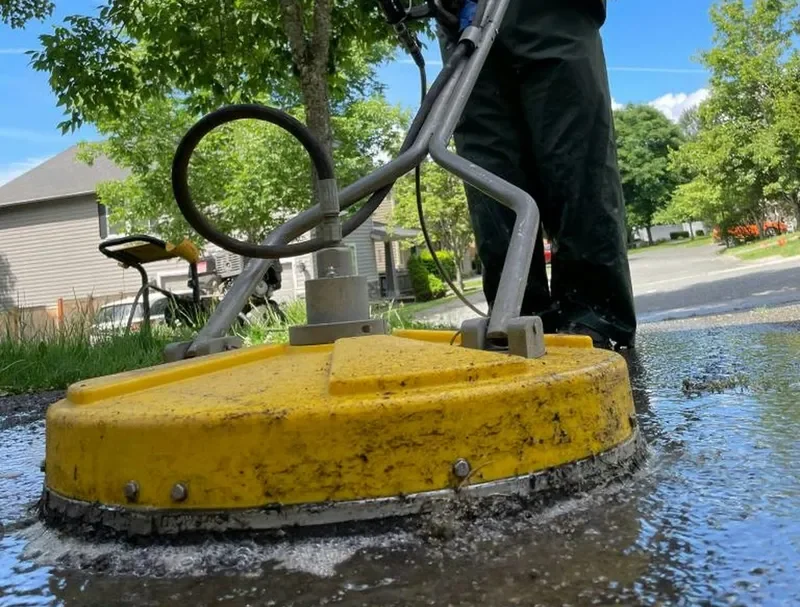
High-pressure cleaning has one legitimate use on a residential property: hard, flat surfaces like concrete driveways, sidewalks, and patios, where a surface cleaner attachment delivers even coverage without streaking. That's it.
Everything else on your home's exterior — vinyl, stucco, Hardie board and other fiber cement siding, wood decks and fences, painted trim, gutters — should be soft washed: low-pressure application of professional-grade cleaning solutions that do the actual cleaning work, not the water force. For the full breakdown of the exact difference between soft washing and pressure washing and why it matters more than most people realize, that's the article to read next. High pressure on these surfaces can strip paint, etch wood grain, force water behind siding and trim, and in the worst cases cause the exact water-intrusion damage the freeze-thaw cycle already threatens.
If a company shows up to "pressure wash" your siding with a wand at full PSI, the timing of the visit is the least of your concerns. If you're curious what a professional cleaning actually includes once you've settled on the right method, that's covered in detail separately.
What Happens If You Skip a Season
Manufacturer guidance for James Hardie fiber cement siding recommends a cleaning cycle every 6 to 12 months to remove dirt, dust, and organic buildup before it compounds. Skip the fall window specifically, and building science research points to something building scientists call the "spring rebound effect": biological growth that isn't fully removed before winter doesn't die. It continues developing beneath the surface, showing up in spring as premature coating failure or early-stage rot. What would have been a routine fall cleaning becomes a bigger problem by the time the ground thaws. See our K-State Research and Extension reference for regional guidance on seasonal maintenance timing in this climate.
Bottom Line for Johnson County Homeowners
Best windows: mid-April to early June, and September through late October
Why: freeze-thaw risk on one end, algae/mildew maturity on the other
Temperature requirement: 50°F to 85°F for cleaning solutions to work properly
The method matters as much as the month: concrete gets pressure, everything else gets soft washed
Don't skip fall: it's the window most homeowners overlook, and the one with the most consequence if missed
If you're not sure which window you're in, or whether a surface on your home needs soft washing versus pressure treatment, that's exactly the kind of judgment call a same-day estimate walkthrough is built to answer.
Ready to get on the schedule for the right window? Get a free estimate and we'll tell you honestly whether now's the time or if you should wait.