

Soft Washing vs. Pressure Washing: What Johnson County Homeowners Need to Know
“Quick Answer: Soft washing uses professional-grade cleaning solutions applied at very low pressure to kill algae, mildew, and grime at the root. Pressure washing uses mechanical force alone. For house siding, Hardie board, wood surfaces, and composite decks and fences - the materials most common on Johnson County homes - soft washing is not just gentler. It produces a deeper, longer-lasting clean without the hidden damage risks that high-pressure washing creates. In this climate, the difference matters more than most homeowners realize.”
When a neighbor mentions they just had their house "pressure washed," they probably mean something was cleaned. What they may not realize is that how a home is cleaned - the method, the pressure, the chemistry - determines whether that cleaning is protecting their home or quietly working against it.
This is the article most exterior cleaning companies won't write for you, because it requires them to explain why high pressure - the thing most people associate with "professional cleaning" - is often the wrong tool for the surfaces it's most commonly used on.
If you own a home in Olathe, Overland Park, Leawood, or anywhere in Johnson County, this is worth understanding before you book any exterior cleaning service.
The Real Difference Isn't Pressure - It's Chemistry vs. Force
Most explainers on soft washing vs. pressure washing lead with the PSI number. Soft washing uses 100–500 PSI. Pressure washing uses 1,500–3,000+ PSI. That's true, but it's the least important part of the story.
The more important distinction is what does the actual cleaning.
With pressure washing, the work is entirely mechanical. High-pressure water is directed at a surface, and the force of that water blasts off whatever is on it. If the surface can withstand the force, it gets clean. If it can't - or if the spray angle is wrong, the nozzle is too close, or the surface has any existing vulnerability - the force does damage.
With soft washing, the chemistry does the cleaning. Professional-grade cleaning solutions are applied at low pressure and allowed to dwell. Those solutions break down organic growth - algae, mildew, mold, bacteria - at the cellular level. The water rinse that follows is just that: a rinse. The job was already done by the chemistry.
This distinction has a practical consequence that almost every homeowner misses: pressure washing cleans what you can see. Soft washing eliminates what's actually causing the problem.
This also means that method selection isn't just about pressure settings - it's about knowing which chemistry is right for each surface. Vinyl siding, Hardie board, natural wood, and composite decking all respond differently to the same cleaning solution. A contractor who applies one-size-fits-all chemistry to every surface isn't just cutting corners - they're creating risk.
What's Actually Growing on Your Home - and Why Kansas City Makes It Worse
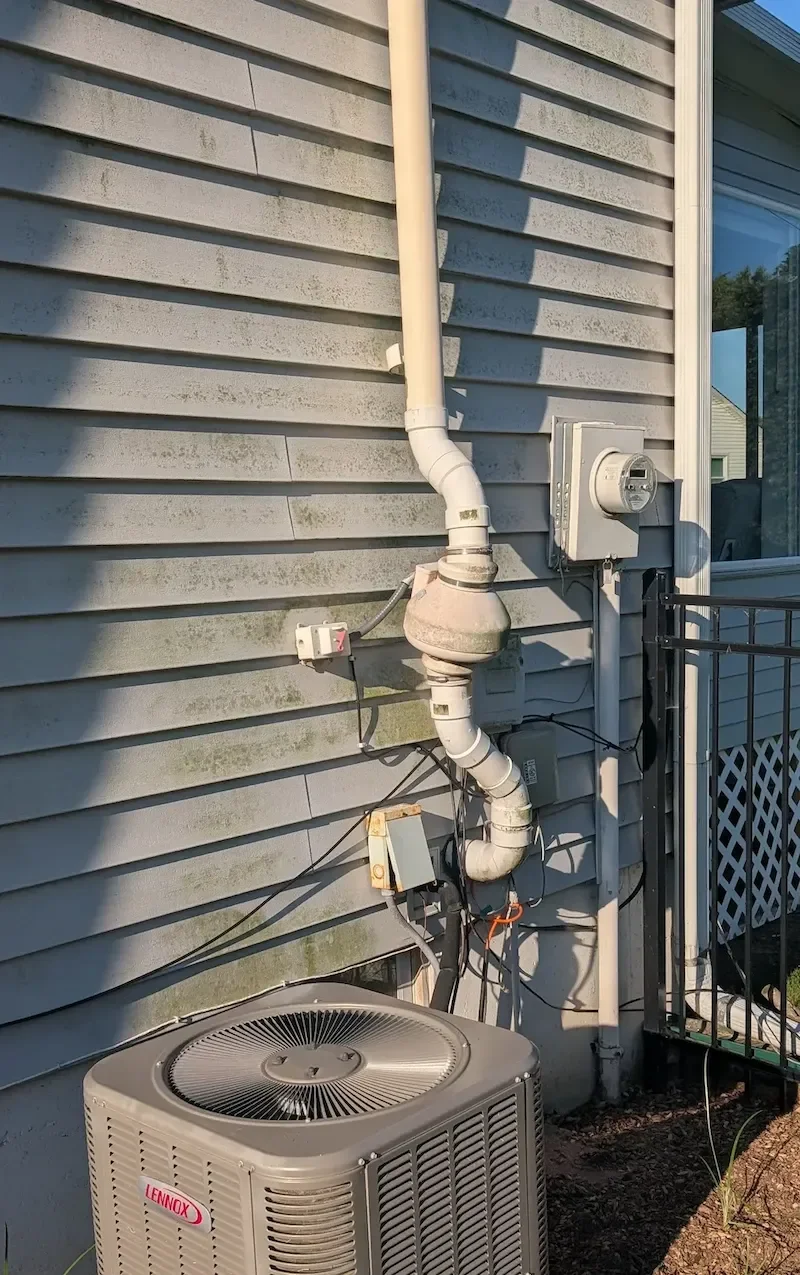
The green, black, and gray discoloration on your siding isn't just dirt. It's alive.
The most common culprit is Gloeocapsa magma - a blue-green cyanobacteria that spreads through the air, lands on exterior surfaces, and feeds on moisture and organic material. It's responsible for the dark streaking you see on siding, gutters, decks, and fences across the Kansas City metro. According to the Asphalt Roofing Manufacturers Association (ARMA), this algae thrives specifically in humid, coastal, and Midwest climates - and by the time it's visible, it has likely been present for several months or longer.
Johnson County's summer climate is exactly what this organism is engineered for. Kansas City's humid conditions - with relative humidity routinely exceeding 60% during summer months - create the ideal breeding environment for exterior algae and mildew growth. The county's mix of mature tree canopy, shaded north-facing elevations, and warm humid summers makes exterior biological growth an annual maintenance issue, not an occasional one.
This matters for cleaning method selection for one specific reason: you cannot pressure wash biology away.
High-pressure water can remove the visible surface layer of algae growth - what you can see. But it cannot kill the organism. The root system, the spores, and the underlying biology remain intact. When pressure washing removes the surface growth without eliminating the root biology, regrowth in humid climates happens aggressively - often within a single season.
Soft washing's chemistry-forward approach attacks these organisms at the source. By killing spores and microorganisms at their root level, it reduces the likelihood of quick regrowth. Industry data consistently shows that soft-washed surfaces stay cleaner for significantly longer - typically two to four times as long - compared to surfaces cleaned by pressure alone.
The Hidden Damage Risk: What High Pressure Actually Does to Your Home
This is the section most homeowners need to read - and that most cleaning companies won't write.
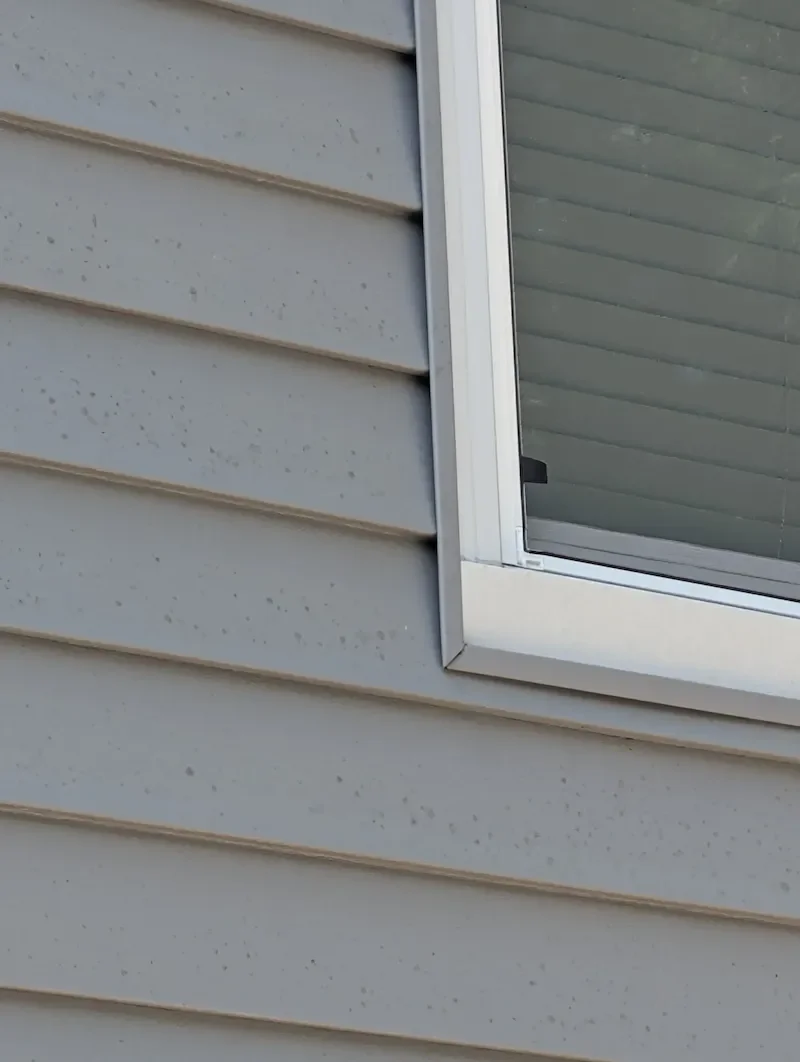
Vinyl Siding
Vinyl siding is the most common exterior material in Johnson County's housing stock, and it's also the material most frequently damaged by high-pressure washing. The reason is counterintuitive to most homeowners.
Vinyl siding is not sealed tight against your home. It's designed to hang with slight gaps that allow expansion and contraction with temperature changes - a critical design feature in a climate with KC's range of seasonal temperatures. Those same gaps mean vinyl is not waterproof from the back side.
When high-pressure water is directed at vinyl siding - especially at an upward angle, or concentrated at seams, trim, or window corners - it gets pushed behind the panels. Once water is behind the siding, it has nowhere to go. There's no sunlight, no airflow. It sits.
The consequences are serious. Mold begins colonizing within 24 to 48 hours of sustained moisture. OSB sheathing behind the panels can begin to swell and delaminate within weeks of continuous water exposure. Over time, that moisture can damage insulation, electrical wiring, and structural framing - repairs that often require removing large sections of siding and cost far more than any cleaning service.
The worst part: you won't see the damage right away. By the time interior signs appear - water stains on walls, mold smell, soft spots - the damage is already significant.
Soft washing applies solutions at well under 500 PSI - in many siding applications, comparable to a standard garden hose - eliminating the water intrusion risk entirely.
Hardie Board (Fiber Cement Siding)
Hardie board fiber cement siding has become increasingly common in newer Johnson County developments, particularly in Olathe's southwest corridor and Overland Park's newer construction neighborhoods. It's durable, attractive, and widely regarded as low-maintenance. Homeowners often assume that means it can handle anything - including a pressure washer.
It cannot.
James Hardie's own maintenance documentation is unambiguous: acid and high-pressure washing can damage the fiber cement surface and is not recommended. The manufacturer's official cleaning spec calls for low-pressure water - under 1,500 PSI with a minimum 6-foot standoff and a wide fan tip - or ideally a standard garden hose and soft bristle brush. Damage from pressure washing voids the James Hardie warranty.
The soft washing approach - low-pressure solution application, dwell, rinse - aligns precisely with what the manufacturer recommends. A standard pressure washing rig at full output does not.
Wood Surfaces - Decks, Fences, and Siding
Wood is the most pressure-sensitive exterior surface on your home. Family Handyman is direct: pressure washing wood can force water up and under exterior surfaces, damaging insulation and electrical wiring and creating conditions for mold growth if pressure is set too high.
For wood decks, fences, and horizontal siding, the risks compound. High pressure on wood strips protective coatings, raises the grain, and creates micro-fissures that become entry points for moisture during rain and freeze-thaw cycles. In Johnson County's climate - where temperatures swing from below freezing to the 90s across a single season - those micro-fissures matter. Water expands when it freezes. Entry points created by aggressive cleaning in the fall become structural damage vectors in the winter.
The correct approach for natural wood: cleaning solutions at a lower concentration applied via low-pressure downstream injection, thorough rinse, and targeted oxalic acid treatment for any remaining staining or discoloration. The chemistry does the work. The pressure is incidental.
Composite Decking and Fencing - The Material Most Homeowners Assume Is Indestructible
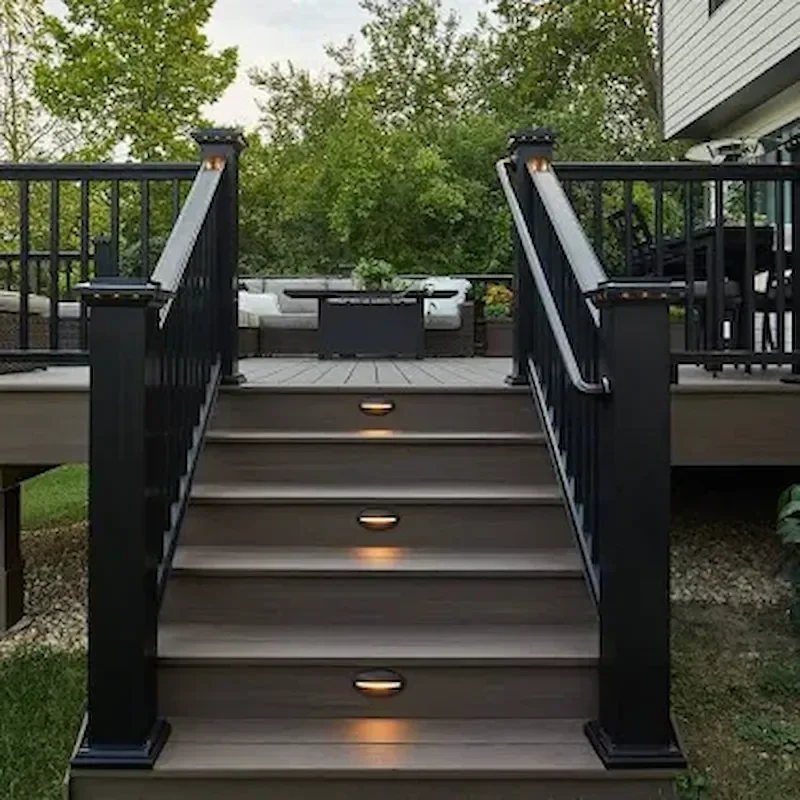
Composite decking and fencing - brands like Trex, TimberTech, and Fiberon - have become the dominant choice for outdoor living surfaces in Johnson County's newer construction, particularly in Overland Park and Olathe's 2000s–2020s developments. Homeowners choose composite specifically because it's marketed as durable and low-maintenance.
But composite has a cleaning problem that surprises many homeowners, and it sits at the intersection of two risks: the wrong pressure and the wrong chemistry.
The pressure risk. Composite boards look tough, but most manufacturers explicitly warn against high-pressure washing. The surface texture on composite - the wood-grain embossing, the brushed or grooved finish that gives it its appearance - can be permanently raised, frayed, or etched by direct high-pressure water. Unlike real wood, which can sometimes be lightly sanded to address surface damage, composite texture damage is irreversible. You cannot sand or refinish composite. Once the surface is etched, it's etched.
High-pressure water also exploits the seams and fastener points on composite installations, forcing water into the substructure - where it can create mold and rot in the underlying joists and framing, even while the composite boards themselves appear fine.
The chemistry risk. This is where composite cleaning diverges sharply from natural wood. The sodium hypochlorite (SH) solutions used at higher concentrations on siding and at lower concentrations on natural wood can discolor or degrade composite surface finishes over time if applied at the wrong concentration. Many composite manufacturers specify that cleaning solutions must be pH-neutral or specifically formulated for composite materials - not the same chemistry used on wood or siding.
The correct approach for composite is a professional-grade degreaser and composite-safe cleaning solution, applied at low pressure, allowed to dwell, and rinsed clean. This removes the algae, mildew, and organic buildup that accumulates in composite's textured grooves without risking chemical damage to the surface coating or mechanical damage to the texture.
This is exactly why "who you hire matters as much as whether you hire someone." A contractor who uses the same chemistry and the same pressure on your composite deck as they do on your concrete driveway doesn't understand the material. The result is damage that may not be immediately visible - but shows up over the following seasons as faded, etched, or discolored boards that no longer look like what you paid for.
Concrete - The One Surface Where Pressure Belongs
To be clear: high-pressure washing is genuinely appropriate for one surface type on your home. Concrete driveways, sidewalks, and flat hardscapes are dense and designed to handle significant mechanical force. Surface cleaners at appropriate PSI produce even cleaning without streaking and effectively remove embedded oil, algae, and weathering from surfaces built to take it.
This is the professional distinction: matching the method and the chemistry to the material. Concrete gets pressure. Siding, Hardie board, wood, composite, and painted surfaces get chemistry.
A Surface-by-Surface Guide for Johnson County Homes
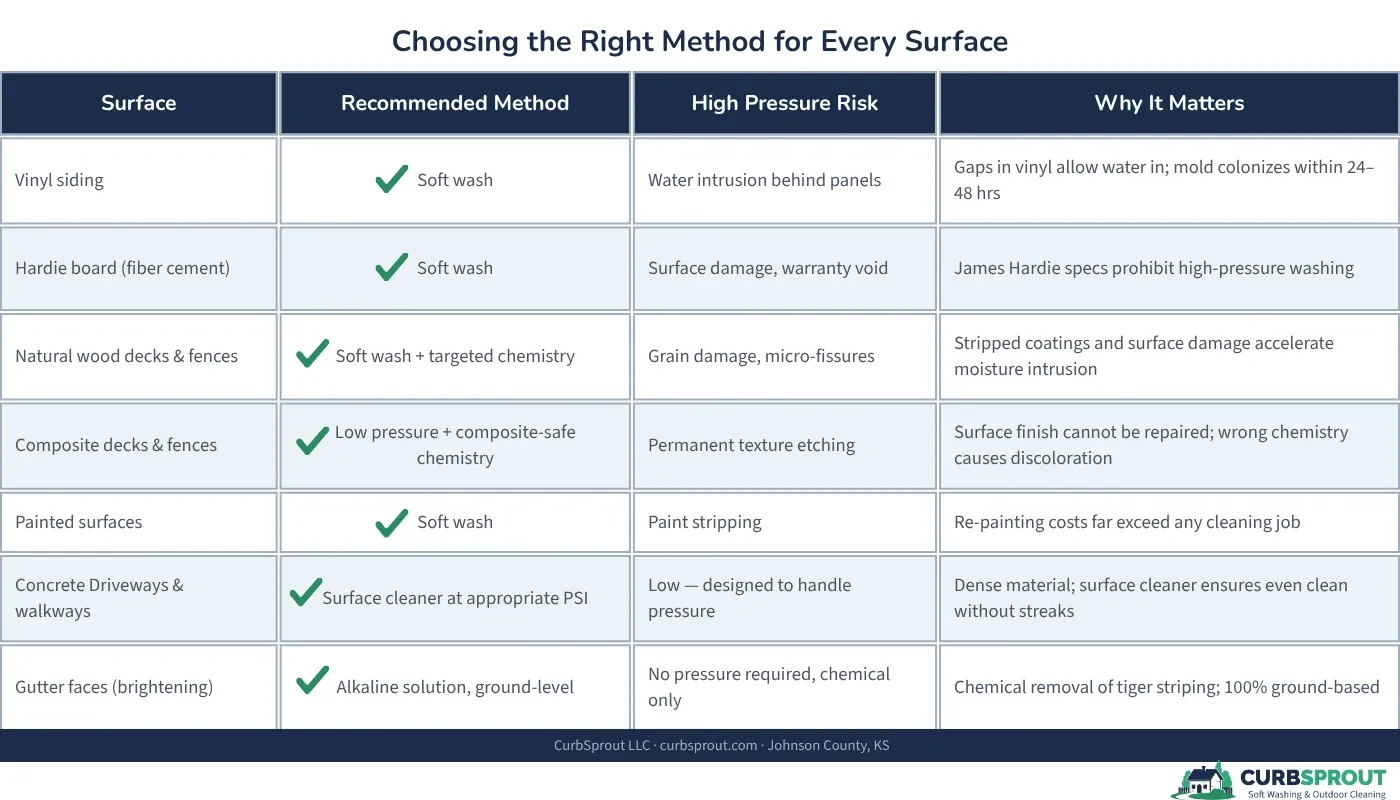
Why Johnson County Homeowners Should Pay Attention to This Conversation
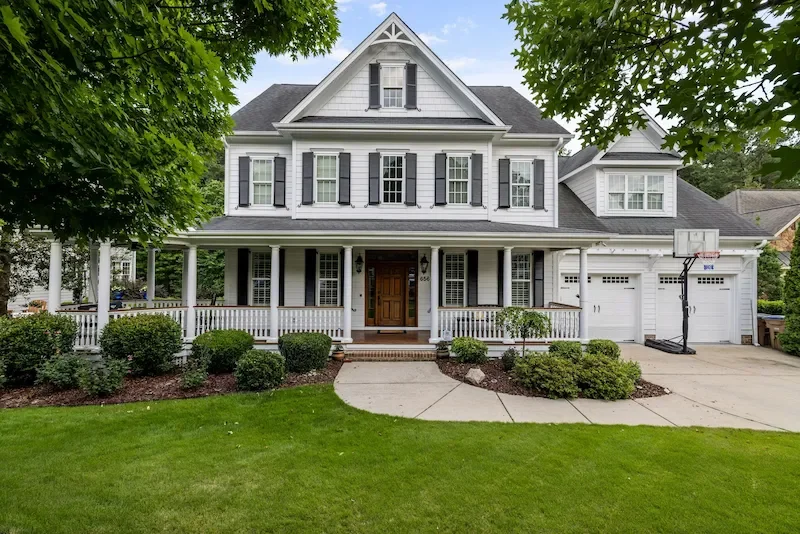
Johnson County is one of the most consistently competitive residential real estate markets in the Kansas City metro. The average home value in Johnson County reached $508,000 in 2025, a 6.5% year-over-year increase. In Overland Park specifically, median closed-sale prices are tracking near $470,000-$475,000, with average sales prices running considerably higher.
At that value level, your home's exterior isn't a cosmetic consideration - it's asset maintenance. If you're wondering what that kind of asset-maintenance approach actually costs, our Johnson County pricing guide breaks down real numbers by service and home size.
The curb appeal premium is real. A clean exterior - free of algae streaking, mildew discoloration, and grimy concrete - signals maintenance and care. Neglect signals the opposite, and buyers price that in.
But the more important point is this: the hidden damage created by aggressive pressure washing is a liability, not a cleaned surface. Water intrusion behind vinyl siding, compromised Hardie board surface seals, composite decking with etched or degraded texture, wood surfaces with raised grain and micro-fissures - none of these are visible from the curb on cleaning day. All of them reduce the structural integrity and future resale value of the home. And all of them are created by the wrong cleaning method, not by a lack of cleaning.
The homeowners in Johnson County who treat exterior cleaning as asset maintenance - choosing chemistry-first methods matched to each surface - are protecting what they've built. The ones who assume the cheapest bid or the most powerful machine is the best option are often creating problems they won't discover until they're listing the home or dealing with a remediation contractor.
How CurbSprout Approaches Every Job
CurbSprout is a soft washing and outdoor cleaning company serving Johnson County - Olathe, Overland Park, Leawood, Mission Hills, and Prairie Village. Every job starts with a surface assessment. What's being cleaned, what it's made of, and what's growing on it determine the chemistry and the approach - before any equipment is loaded.
For vinyl siding and Hardie board, that means professional-grade cleaning solutions applied via downstream injection at concentrations matched to the surface and the biological load, then a thorough low-pressure rinse. For natural wood surfaces - decks, fences, and playsets - it means the same chemistry-first approach with targeted oxalic acid treatment for any remaining staining. For composite decks and fences, it means composite-safe cleaning solution at low pressure, protecting the surface finish that makes composite worth what you paid for it. For concrete, it means pre-treatment and surface cleaner at appropriate PSI - the one place mechanical pressure earns its place.
Every job is 100% ground-based. No ladders, no one on your roof. $1M in general liability insurance on every job. A quality guarantee that means what it says: if we miss a spot or results fall short, we come back at no charge. For a full walkthrough of what that process looks like on job day - from the initial assessment to the final rinse - see what's included in a professional cleaning service.
If you've been putting off exterior cleaning because you weren't sure whether it was safe or worth the cost, this is the answer: the right method is both. The wrong one is neither.
Ready to see the difference? Get a free estimate - same-day response, no obligation. Request your free estimate here